


CTC vs. Orthodox Tea: Which Black Tea is Right for You?
If you’ve ever stood in the tea aisle or scrolled through an online shop feeling slightly overwhelmed by the technical jargon, you aren’t alone. Between "single-estate," "first flush," and "broken orange pekoe," there are two terms that actually define the soul of your morning cup: CTC vs Orthodox Tea.
At its core, the difference isn’t just about quality; it’s about the "personality" of the tea. One is a bold, energetic wake-up call, while the other is a slow, contemplative experience. Let’s dive into the world of tea processing to see which one deserves a permanent spot in your cupboard.
What is Black CTC Tea?
CTC stands for Crush, Tear, and Curl. Developed in the 1930s to automate tea production, this method involves passing fresh tea leaves through a series of cylindrical rollers with sharp teeth. These rollers literally crush, tear, and curl the leaves into small, uniform, hard pellets.
Because the leaf is broken down so thoroughly, the oxidation process is intense. This creates a Black CTC Tea that is incredibly consistent, robust, and deeply coloured. If you’ve ever enjoyed a classic "builder's tea" or a strong cup of breakfast tea, you’ve likely been drinking CTC. It is the powerhouse of the tea world, designed to infuse quickly and deliver a punchy, astringent flavour that holds its own against anything you add to it.
Understanding the Elegance of Orthodox Tea
In contrast, Orthodox tea refers to the traditional method of tea production. Instead of being shredded by machines, the leaves are treated with a gentle touch. They are withered, then rolled (either by hand or by machines that mimic hand-rolling) to preserve the integrity of the leaf.
The goal of Orthodox processing is to keep the tea leaves as whole as possible. This preserves the delicate essential oils and complex chemical compounds within the leaf. When you brew a cup of Orthodox tea, you aren’t just getting "tea flavour"; you are tasting the terroir, the soil, the altitude, and the weather of the garden where it grew. It’s a slower, more artisanal process that results in a multi-layered flavour profile.
The Great Debate: CTC vs Orthodox Tea
When comparing CTC vs Orthodox Tea, it’s helpful to think of them like coffee. CTC is your reliable, high-caffeine espresso, intense and concentrated. Orthodox is more like a pour-over or a fine wine, subtle, aromatic, and meant to be sipped slowly.
|
Feature |
Black CTC Tea |
Orthodox Tea |
|
Appearance |
Small, dark brown pellets |
Long, twisted, whole or broken leaves |
|
Infusion Speed |
Very fast (1-2 minutes) |
Slower (3-5 minutes) |
|
Flavor Profile |
Brisk, malty, and bold |
Floral, fruity, or nutty |
|
Best Enjoyed |
With milk and sugar |
Plain (Clear) |
One isn't "better" than the other; they simply serve different moods. If you are looking for a complex afternoon tea, Orthodox is your winner. But if you want a reliable, "kadak" (strong) cup that wakes up your senses, CTC is the undisputed champion.
Why CTC is the King of Chai
In many parts of the world, particularly in India, tea isn't just steeped in water; it's simmered with milk and spices. This is where the Best CTC Tea for Chai truly shines.
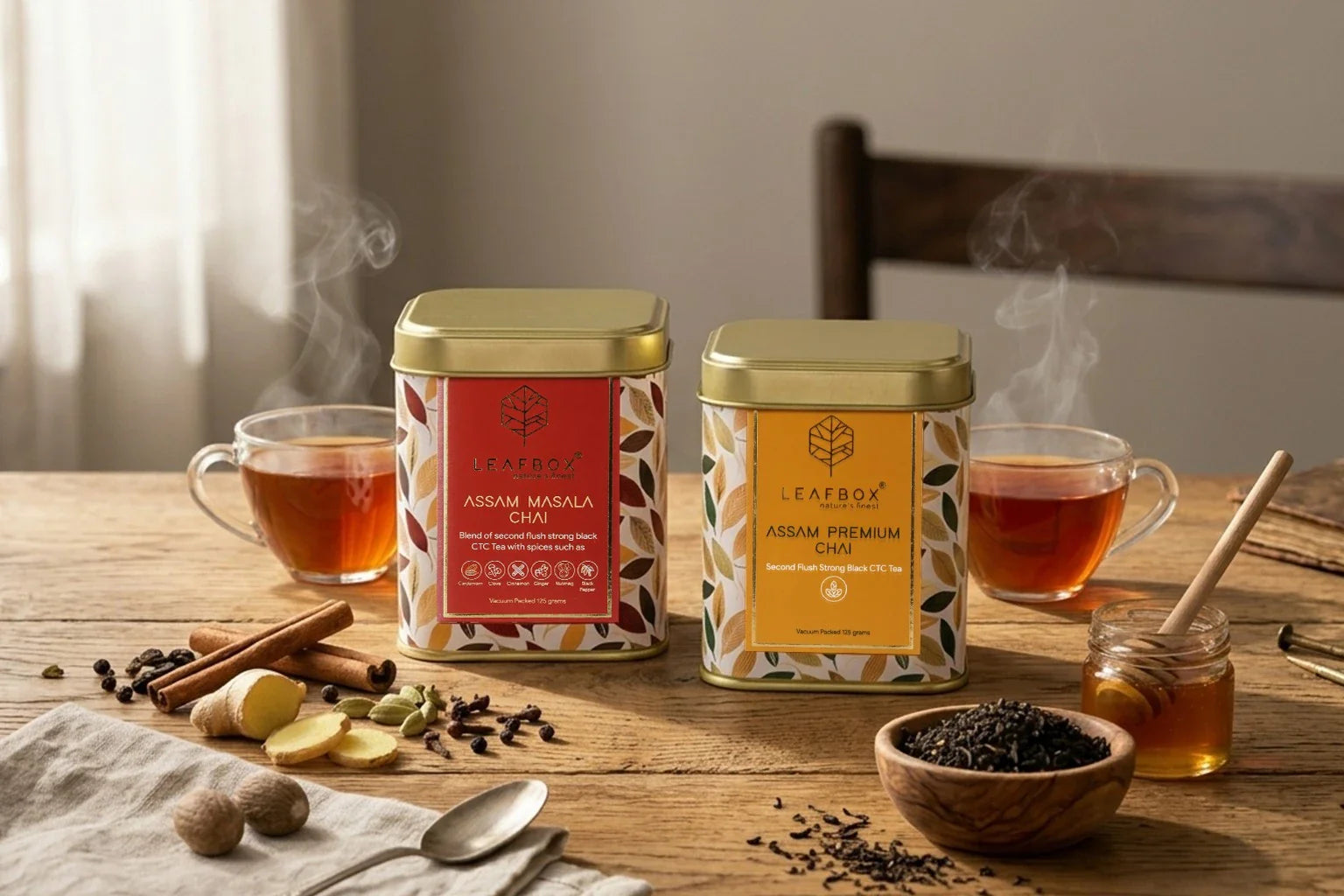
Because CTC tea has a larger surface area (thanks to those tiny pellets), it releases its tannins and colour almost instantly. This "body" is essential when you're making an Assam Masala Chai. If you used a delicate Orthodox leaf for chai, the flavour would be completely drowned out by the milk and ginger. Leafbox tea sources its CTC specifically for this purpose, providing that deep, coppery base that balances the creamy sweetness of milk and the heat of spices perfectly.
Which One Should You Choose?
Deciding between these two depends entirely on your brewing habits:
-
Choose Black CTC Tea if: You love a strong, malty cup in the morning, you always add milk, or you are looking for the most caffeine-efficient way to start your day.
-
Choose Orthodox if: You enjoy the ritual of tea, you like to see the leaves unfurl in your teapot, and you prefer drinking your tea without any additives to appreciate the natural sweetness.
For most tea lovers, the answer is actually "both." You might want an Assam Premium Tea from Leafbox tea processed via CTC for your busy Monday mornings, and a delicate Orthodox Darjeeling for a quiet Sunday afternoon. Integrating both into your pantry ensures you have the right profile for every mood and occasion.
Conclusion
The world of tea is vast, but understanding the fundamental difference between CTC vs Orthodox Tea helps you shop with confidence. Whether you are craving the nuanced notes of a whole-leaf brew or the invigorating strength of a Black CTC Tea, the key is starting with high-quality, garden-fresh leaves.
At Leafbox Tea, we believe every cup should be an experience. From our robust Assam Premium Tea to our aromatic Assam Masala Chai blends, we bridge the gap between traditional tea gardens and your teacup. We invite you to explore our collection and find the perfect match for your unique palate.
Ready to find your favourite? Visit our shop today and experience tea the way it was meant to be.
Read more

Host the Perfect Summer Garden Party: A Guide to Iced Tea Mocktails
There is something undeniably magical about a garden party. The golden hour light filtering through the trees, the soft hum of conversation, and the scent of blooming jasmine in the air. But as the...
Read more
The Art of the Chill: How to Cold Brew Summer Oolong Tea for Heatwave Relief
As the sun settles into its peak intensity and the afternoon air begins to shimmer with heat, our instinct is to seek refuge. We retreat into the shade, turn up the fans, and inevitably reach for s...
Read more